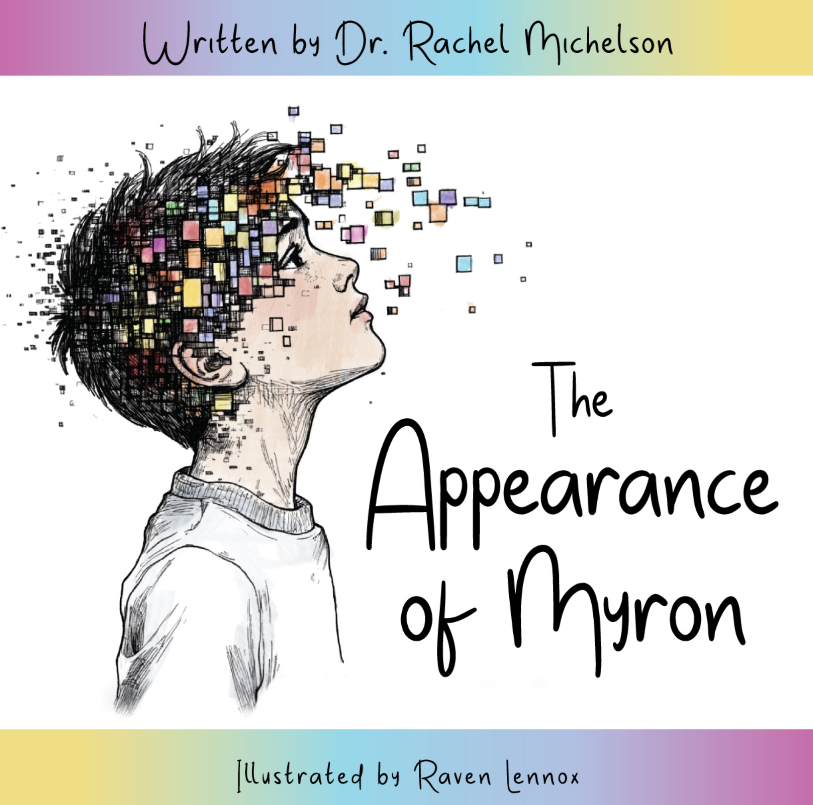
My neighbor recommended an episode of “This American Life” to me after he’d read the sample of “The Appearance of Myron.” It detailed a federal court case regarding transgender military members being separated against their will from their careers. This episode was voice-acted–reporters can’t record in federal court. The judge explains that there are about 30 different biological genders.
I’ve known people with Turner Syndrome and knew about several other medical conditions that can have organ problems due to chromosomal differences, but I didn’t know the massive variations. I never would’ve imagined that there, in fact, more than 30 distinct biological genders!
An accessible documentary features Katie Couric–it’s a little dated at this point–has some insights that are useful. Brain differences are documented via MRI and pioneer public figures are interviewed. One can begin seeing past the binary by viewing this film.
Suffice to say, babies aren’t only those born with XX or XY chromosomes.
And gender as an identity and expression are incredibly unique and individual. They may be unrelated to biological sex.
I’m having some personal emotional reactions now that Myron’s story is being published.
I’m thinking about how when I identified as male, it was likely because people around me called me a boy and I liked the performative aspects of a male presentation. I identified with social characteristics of being male. I was always in trees, running around, building odd things out of wood and using poster paints to make each part look like a specific material, and generally being rough in my play and leisure. That was like my first volume in my life.
My second volume came at about 12 when progesterone and estrogen entered my system and I realized I was a girl who liked girls. I wasn’t a boy. That would take me years to fully accept.
My third volume is being written. More than I had ever anticipated is shifting around in my head and heart and is taking root because Myron will be out in the world. I’m unsure what to expect.
I do know that gender is so complicated. While identification as non-binary is rare, a spectrum of male and female identification is seen as more inclusive (Speechley, Modecki & Stuart, 2023). I wonder how gender non-conformity will alter as this decade enters the midway point for the 20s of the 21st century?
 Myron and friends